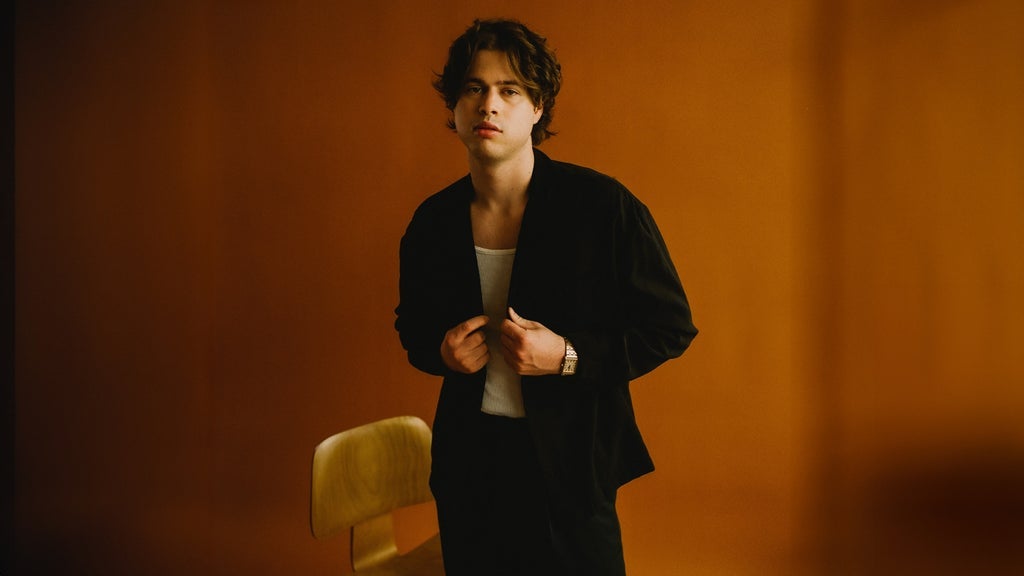
Braid
Owen, Laura Stevenson and the Cans, Aficionado
Thu, August 9, 2012
Doors: 7:00 pm / Show: 8:00 pm
The Bowery Ballroom
New York, NY
$20
Tickets
This event is 18 and over
http://www.boweryballroom.com/event/120575/Braid

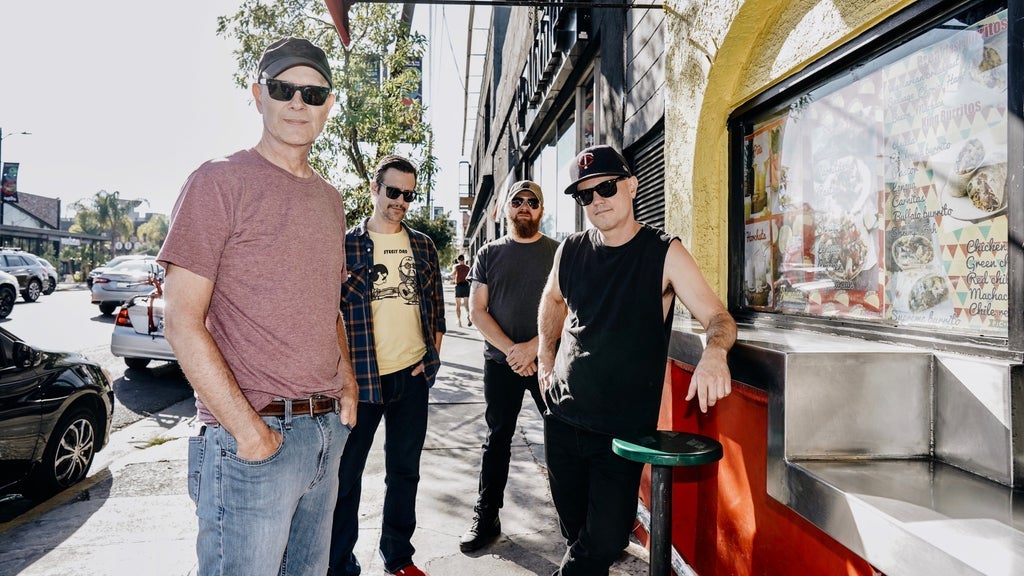
Braid is an influential emo/post-hardcore band from Illinois that formed in 1993. After forming, the band went through several line-up changes but eventually settled on: Bob Nanna on guitar/vocals, Todd Bell on bass, Chris Broach on guitar/vocals and, Roy Ewing on drums. Roy was replaced in 1997 by Damon Atkinson.
Braid disbanded in 1999 leaving Nanna, Bell, and Atkinson to form Hey Mercedes with Mark Dawursk while Broach would dedicate more time to The Firebird Band which was hitherto a side project.
The band reformed for a comprehensive US/Canada tour from June–August 2004 & a brief Japanese tour in August 2004. Braid became active once again in 2011, releasing an EP and playing a few shows, including their 600th show.
Braid disbanded in 1999 leaving Nanna, Bell, and Atkinson to form Hey Mercedes with Mark Dawursk while Broach would dedicate more time to The Firebird Band which was hitherto a side project.
The band reformed for a comprehensive US/Canada tour from June–August 2004 & a brief Japanese tour in August 2004. Braid became active once again in 2011, releasing an EP and playing a few shows, including their 600th show.
Owen

In the past decade, Chicago's Mike Kinsella has played a variety of instruments in a handful of bands including Cap'n Jazz, Joan of Arc, The One Up Downstairs, American Football, Owls, Maritime, and Aloha. Owen is his solo project.
The impetus for Owen was a direct result of the demise of American Football. Up to that point, having been associated with a number of bands, Mike sought a project where he could have complete creative control over all aspects including songwriting, recording, album artwork, and overall artistic direction.
When it came time to record his solo album, Mike approached Polyvinyl with the idea to take the money that normally would be spent on a recording studio and instead spend it on software so he could record the album on his own. He ended up heading to his mother's house in Chicago and turned his old bedroom into a recording studio. Wishing to avoid the connotations associated with solo singer-songwriters, Mike began recording under the pseudonym, 'Owen.'
Owen's debut, Owen was a stark departure from previous Mike Kinsella projects. There no longer existed a need to play odd time signatures just for the sake of being different or writing parts that were technically challenging purely for the sake of being technically challenging. What remained was an artist finding his way through his home studio for the first time while recording all instrumentation on his own.
For 2002's No Good For No One Now, Owen's second full-length, a similar arrangement of purchasing recording equipment instead of studio time was agreed upon. This time the money went towards the purchase of microphones. No Good For No One Now was more realized than the first album owing in part to the experience of self-recording Owen. The most notable distinction between the two albums was Mike's increased use of lyrical, literary devices: each song told a story.
In 2004, in collaboration with Cale Parks (of Aloha), Bob Hoffnar, Jen Tabor, and Paul Koob, Mike began recording again. What resulted was (the ep). The joint effort marked a turning point of sorts for Owen. Rumors began to swirl that a live band would be taken on the road for the first time but these rumors never materialized as Mike again rejoined Joan of Arc and became a touring member of both Maritime and Aloha.
(the ep) had been written as a companion piece to a scheduled full-length. In summer 2004, Mike again began recording and collaborating, this time with cousin Nate Kinsella ( Make Believe, Joan of Arc) who lent assistance both on instrumentation and engineering. The results of these efforts were I do perceive., Owen's third full-length.
On At Home With Owen, Mike figuratively leaves the at-home bedroom that has characterized so much of Owen's past musical output. His step away from bedroom recording allowed for an alternative approach to the songs recorded on At Home With Owen. "I've always hated how two dimensional the other Owen albums have sounded, and I think this one's finally got a third dimension," says Kinsella. The new approach to recording involved a fraction of pre-recording at Mike's mom's house, followed by sessions at Semaphore Studios with cousin Nate Kinsella (Joan of Arc, Make Believe) and finally at Engine Studios with Brian Deck (Iron & Wine, Red Red Meat). This newfound transient approach to recording allows the music of Owen to reach a new depth; one that sways between organic overtures and fervent, lush ballads.
The impetus for Owen was a direct result of the demise of American Football. Up to that point, having been associated with a number of bands, Mike sought a project where he could have complete creative control over all aspects including songwriting, recording, album artwork, and overall artistic direction.
When it came time to record his solo album, Mike approached Polyvinyl with the idea to take the money that normally would be spent on a recording studio and instead spend it on software so he could record the album on his own. He ended up heading to his mother's house in Chicago and turned his old bedroom into a recording studio. Wishing to avoid the connotations associated with solo singer-songwriters, Mike began recording under the pseudonym, 'Owen.'
Owen's debut, Owen was a stark departure from previous Mike Kinsella projects. There no longer existed a need to play odd time signatures just for the sake of being different or writing parts that were technically challenging purely for the sake of being technically challenging. What remained was an artist finding his way through his home studio for the first time while recording all instrumentation on his own.
For 2002's No Good For No One Now, Owen's second full-length, a similar arrangement of purchasing recording equipment instead of studio time was agreed upon. This time the money went towards the purchase of microphones. No Good For No One Now was more realized than the first album owing in part to the experience of self-recording Owen. The most notable distinction between the two albums was Mike's increased use of lyrical, literary devices: each song told a story.
In 2004, in collaboration with Cale Parks (of Aloha), Bob Hoffnar, Jen Tabor, and Paul Koob, Mike began recording again. What resulted was (the ep). The joint effort marked a turning point of sorts for Owen. Rumors began to swirl that a live band would be taken on the road for the first time but these rumors never materialized as Mike again rejoined Joan of Arc and became a touring member of both Maritime and Aloha.
(the ep) had been written as a companion piece to a scheduled full-length. In summer 2004, Mike again began recording and collaborating, this time with cousin Nate Kinsella ( Make Believe, Joan of Arc) who lent assistance both on instrumentation and engineering. The results of these efforts were I do perceive., Owen's third full-length.
On At Home With Owen, Mike figuratively leaves the at-home bedroom that has characterized so much of Owen's past musical output. His step away from bedroom recording allowed for an alternative approach to the songs recorded on At Home With Owen. "I've always hated how two dimensional the other Owen albums have sounded, and I think this one's finally got a third dimension," says Kinsella. The new approach to recording involved a fraction of pre-recording at Mike's mom's house, followed by sessions at Semaphore Studios with cousin Nate Kinsella (Joan of Arc, Make Believe) and finally at Engine Studios with Brian Deck (Iron & Wine, Red Red Meat). This newfound transient approach to recording allows the music of Owen to reach a new depth; one that sways between organic overtures and fervent, lush ballads.
Laura Stevenson and the Cans

Laura Stevenson was schooled in the traditional music of her grandfather and grandmother (composer of "The Little Drummer Boy" and vocalist for the Benny Goodman Orchestra respectively) from an early age. It wasn't until she started performing with Bomb The Music Industry in her teens, that she began writing on her own. Privately crafting songs on the softer side of indie rock and traditional folk, Stevenson was soon tapped as the band's opener and, with the addition of Mike Campbell and Alex Billig in 2007, Laura Stevenson and the Cans solidified. Their live band grew into a quintet, often times swelling to eight members, and the following debut LP, A Record, won them fans far and wide having been downloaded over 25,000 time since it's 2008 release.
Sit Resist, an album centered around never sitting stagnant, sees a matured band that has been continuously at work writing, arranging and touring for the past three years. Lyrically, Stevenson's pen has a sharp, poetic tone, making it impossible not to be taken in by her stories. Where A Record crackled with Stevenson's intimate voice alongside gentle acoustics, begging the listener nearer, Sit Resist commands the attention of all within earshot with its rich instrumentation and textured melodies.
Over the course of the album's thirteen songs, you'll hear the band weld a variety of musical styles that dreamily caress and nurture one another into a wholly unique rendering of Americana. "Master of Art" with its Phil Spector-esque, girl-group tease of an intro, explodes with the energy of Stevenson's voice - an instrument that is as strong as it is lovely. "Caretaker" conjures up ghosts and memories of homes inevitably / regrettably left behind. You'll find major-key resolution in the juxtaposed tale that is "The Healthy One," and "I See Dark" waltzes you, dear listener, into the lonely night, hand-in-hand.
The overall effect achieved by Laura Stevenson & the Cans is an album that's as invigorating and life-affirming as it is quietly emotional and delicate. This is an intelligent, literate album crafted of fragments of fleeting memories of time and place, yet it manages to convey volumes. Sit Resist is a true piece of art! Out now on Don Giovanni Records.
Sit Resist, an album centered around never sitting stagnant, sees a matured band that has been continuously at work writing, arranging and touring for the past three years. Lyrically, Stevenson's pen has a sharp, poetic tone, making it impossible not to be taken in by her stories. Where A Record crackled with Stevenson's intimate voice alongside gentle acoustics, begging the listener nearer, Sit Resist commands the attention of all within earshot with its rich instrumentation and textured melodies.
Over the course of the album's thirteen songs, you'll hear the band weld a variety of musical styles that dreamily caress and nurture one another into a wholly unique rendering of Americana. "Master of Art" with its Phil Spector-esque, girl-group tease of an intro, explodes with the energy of Stevenson's voice - an instrument that is as strong as it is lovely. "Caretaker" conjures up ghosts and memories of homes inevitably / regrettably left behind. You'll find major-key resolution in the juxtaposed tale that is "The Healthy One," and "I See Dark" waltzes you, dear listener, into the lonely night, hand-in-hand.
The overall effect achieved by Laura Stevenson & the Cans is an album that's as invigorating and life-affirming as it is quietly emotional and delicate. This is an intelligent, literate album crafted of fragments of fleeting memories of time and place, yet it manages to convey volumes. Sit Resist is a true piece of art! Out now on Don Giovanni Records.
Aficionado
It's really easy to play it safe and jump on board the latest trend, imitating the exact style and sound of everyone's favorite band of the week. It's really easy to play into the hands of a specific demographic, knowing without a doubt in your mind that kids will eat up every hook and pile on for every sing-a-long. But how many times can we walk down the same old roads? At some point, we need to break from this monotony and make our own roads. We need to create something for ourselves that is more than just a quick, cheap, and easy sell. Something that has many layers to dissect, discover, and enjoy. This is what Aficionado has set out to do.
Drawing influence from an array of bands ranging from At the Drive-In, to Cursive, to the Hold Steady, Aficionado has a developed a unique style they are happy to call their own. With roots in punk music, the band mixes organ, flute, and occasional horn arrangements into it's unorthodox blend of post-punk.
Aficionado is proud to announce the band's signing to the ever moving forward No Sleep Records. Expect their debut No Sleep release "When It Comes to Creation" in the fall of 2010
Drawing influence from an array of bands ranging from At the Drive-In, to Cursive, to the Hold Steady, Aficionado has a developed a unique style they are happy to call their own. With roots in punk music, the band mixes organ, flute, and occasional horn arrangements into it's unorthodox blend of post-punk.
Aficionado is proud to announce the band's signing to the ever moving forward No Sleep Records. Expect their debut No Sleep release "When It Comes to Creation" in the fall of 2010