Family Records Holiday Extravaganza
Pearl and the Beard
Wakey! Wakey!
Rosi Golan, Casey Shea
Thu, December 15, 2011
Doors: 7:00 pm / Show: 8:00 pm
The Bowery Ballroom
New York, NY
$15
Tickets
This event is 18 and over
http://www.boweryballroom.com/event/71381/Pearl and the Beard

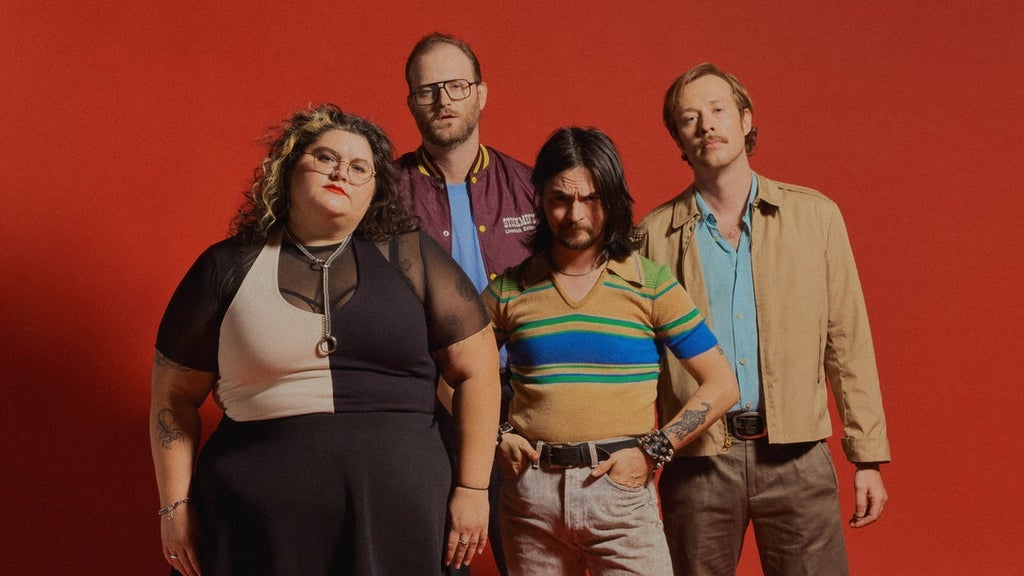
Pearl and the Beard is three voices, one cello, one guitar, one glockenspiel, one melodica, several drums, one accordion, ninety-six teeth, and one soul.
Former strangers Jocelyn Mackenzie, Emily Hope Price, and Jeremy Styles were united in the great city of New York. Each had migrated there from a far corner of the nation with naught but food in their pockets and money in their bellies. Each had the same true love. Since then, the three have nested, and their unique brand of brightly melodic songcraft continues to blossom of its own accord.
Pearl and the Beard loves you the way you’ve always been.
Former strangers Jocelyn Mackenzie, Emily Hope Price, and Jeremy Styles were united in the great city of New York. Each had migrated there from a far corner of the nation with naught but food in their pockets and money in their bellies. Each had the same true love. Since then, the three have nested, and their unique brand of brightly melodic songcraft continues to blossom of its own accord.
Pearl and the Beard loves you the way you’ve always been.
Wakey! Wakey!

“I was a scrawny, dopey kid—the worst athlete on the face of the planet,” says Wakey!Wakey! frontman Mike Grubbs. “You know tee ball? I got to first base one time.”
Good thing Grubbs had a burgundy baby grand to wail on instead, the centerpiece of a Partridge-like music room that also housed a French horn, clarinet, violin and autoharp. Grubbs started climbing scales and chords here when he was 5. Back then, his mother—a longtime piano teacher and choir director—would ask the kids to sight read songs before they could even think of eating cereal. And homework, why, that was something you did simply to score more bench time.
“For every subject done,” he says, “I could play the piano for an hour. It was almost like video games for me.” The games got a bit more complicated in high school, as Grubbs stumbled upon the songbooks of Billy Joel and Elton John. Not to mention the arena-ready anthems of Led Zeppelin. That unholy trinity, combined with the three B’s—Bach, Beethoven and Brahms—was enough to steer Grubbs away from the church music he was forced to focus on from an early age.
“One of my main influences now is the fact that I didn’t have someone teach me proper jazz or rock playing,” explains Grubbs. “I had no idea how to put a song together; no one telling me, ‘Hey, you should check out Gershwin,’ but it was all so fascinating to me. So I found my own style by experimenting with what works and what doesn’t.”
Before Grubbs could tap his true voice through a string of buzz-stirring Wakey!Wakey! releases on Family Records (two live LPs, a free collection of covers and last spring’s War Sweater EP), the following dues were paid: a totally ‘90s bar gig aimed at pint-slamming college kids; a rock band best described by its beard quotient and Black Crowes nods (Satellite Kid); and two touring musicals (Brigadoon, Camelot). “I’m a tall, skinny straight guy who can sing,” says Grubbs. “That’s basically gold in the musical theater business because there’s none of us.”
Speaking of standing out, Wakey!Wakey! made their presence known over the past couple years by finding a perfect balance between crowd-pleasing pop and art-damaged indie rock. It’s something Grubbs learned from New York’s anti-folk scene and its founding father, Lach. (The Lower East Side icon mentored Grubbs, which isn’t a surprise—Lach shunned the piano the second he heard the Sex Pistols.) “To come from such a repressed musical environment and then hear someone like Regina Spektor perform with such abandon—shouting and hitting her stool with a drum stick—was priceless.”
Nowadays, Grubbs is the crazy one, slapping his piano around and singing like his life depends on it while conducting a rich backdrop of sweeping strings, heavenly harmonies, and enough delicate details to make Wakey!Wakey!’s first proper LP feel like an Oscar-nominated film soundtrack. Which is ironic to say the least. After all, One Tree Hill creator Mark Schwahn loved a Wakey!Wakey! set so much he tapped their sun-stroked “War Sweater” track for season 6’s finale and recruited Grubbs for a recurring role. That’d be the tale of a bartender/musician named, err, Grubbs—a strangely familiar life story hinted at in such standout Wakey!Wakey! songs as “Almost Everything,” “Twenty-Two,” and “Got It All Wrong.”
“We set out to make an album this time,” explains Grubbs. “I realize that’s not where people say this business is headed these days, but there’s something about translating a year’s worth of experience into ten songs and letting that tell the story. I feel lucky to have the chance to do that on my own terms.”
Good thing Grubbs had a burgundy baby grand to wail on instead, the centerpiece of a Partridge-like music room that also housed a French horn, clarinet, violin and autoharp. Grubbs started climbing scales and chords here when he was 5. Back then, his mother—a longtime piano teacher and choir director—would ask the kids to sight read songs before they could even think of eating cereal. And homework, why, that was something you did simply to score more bench time.
“For every subject done,” he says, “I could play the piano for an hour. It was almost like video games for me.” The games got a bit more complicated in high school, as Grubbs stumbled upon the songbooks of Billy Joel and Elton John. Not to mention the arena-ready anthems of Led Zeppelin. That unholy trinity, combined with the three B’s—Bach, Beethoven and Brahms—was enough to steer Grubbs away from the church music he was forced to focus on from an early age.
“One of my main influences now is the fact that I didn’t have someone teach me proper jazz or rock playing,” explains Grubbs. “I had no idea how to put a song together; no one telling me, ‘Hey, you should check out Gershwin,’ but it was all so fascinating to me. So I found my own style by experimenting with what works and what doesn’t.”
Before Grubbs could tap his true voice through a string of buzz-stirring Wakey!Wakey! releases on Family Records (two live LPs, a free collection of covers and last spring’s War Sweater EP), the following dues were paid: a totally ‘90s bar gig aimed at pint-slamming college kids; a rock band best described by its beard quotient and Black Crowes nods (Satellite Kid); and two touring musicals (Brigadoon, Camelot). “I’m a tall, skinny straight guy who can sing,” says Grubbs. “That’s basically gold in the musical theater business because there’s none of us.”
Speaking of standing out, Wakey!Wakey! made their presence known over the past couple years by finding a perfect balance between crowd-pleasing pop and art-damaged indie rock. It’s something Grubbs learned from New York’s anti-folk scene and its founding father, Lach. (The Lower East Side icon mentored Grubbs, which isn’t a surprise—Lach shunned the piano the second he heard the Sex Pistols.) “To come from such a repressed musical environment and then hear someone like Regina Spektor perform with such abandon—shouting and hitting her stool with a drum stick—was priceless.”
Nowadays, Grubbs is the crazy one, slapping his piano around and singing like his life depends on it while conducting a rich backdrop of sweeping strings, heavenly harmonies, and enough delicate details to make Wakey!Wakey!’s first proper LP feel like an Oscar-nominated film soundtrack. Which is ironic to say the least. After all, One Tree Hill creator Mark Schwahn loved a Wakey!Wakey! set so much he tapped their sun-stroked “War Sweater” track for season 6’s finale and recruited Grubbs for a recurring role. That’d be the tale of a bartender/musician named, err, Grubbs—a strangely familiar life story hinted at in such standout Wakey!Wakey! songs as “Almost Everything,” “Twenty-Two,” and “Got It All Wrong.”
“We set out to make an album this time,” explains Grubbs. “I realize that’s not where people say this business is headed these days, but there’s something about translating a year’s worth of experience into ten songs and letting that tell the story. I feel lucky to have the chance to do that on my own terms.”
Rosi Golan

Rosi Golan didn’t so much choose to be a songwriter as much as it took her over. In many ways, Golan’s songwriting can most closely be likened to a storm, or a weather system that has come and stayed for the last decade of her life. In the years since this weather system has entered her life, it’s changed significantly – gaining elements and force as it travels across the topography of her emotional life. This weather system has reached its most lovely expression on Golan’s sophomore album, Lead Balloon, the culmination of two years, organized around the pain and joy contained within that space.
Unlike most, Golan didn’t dream of live shows and lyrics. At the age of 19, Golan found herself rudderless and unsure, reeling from the simultaneous experiences of both personal and communal tragedy. “My grandmother passed away, and it was not long after September 11th. I was trying to figure out what I was going to do with my life,” Golan explains. “I was having this thought while I was in a car – and a commercial came on for a guitar store.” Shortly thereafter, Golan found herself there, and, never having played before, purchased a guitar for the self-admitted worst reason ever: “I liked the color,” she laughs. It shouldn’t have worked out, but it has.
In the years since that fateful radio tuning, Golan has worked to refine and calibrate her sound, collecting new elements and shaping it in the places she finds herself. The Drifter & The Gypsy, Golan’s first album, generated several songs that were prominently featured on numerous television shows (including One Tree Hill and Private Practice) and in film (Dear John). Golan embarked on a series of tours on the strength of Drifter that sent the Israeli-born Golan traipsing the globe. Lead Balloon was written on breaks from tours over the past two years, Golan can hear the spaces the songs took shape in – there is the bone-damp of London, the constant buzz of Brooklyn, the arid wind of Los Angeles. Building on the success of the friendships that lead to her well-received debut, Golan continued working with many of the songwriters she co-wrote that album with. “Everyone who I co-wrote with has become like family,” says Golan. “Generally, the group of people I write with are people who I have a relationship with, who I keep in touch with. We spend time together outside of writing music together.” The emotional shorthand shared in the context of her friendships imbues the tracks with a warm ease, even if the subject matter lacks it.
If the relationships were what Golan wanted to carry forward on this record, its production was another matter. “I wanted to throw in some wrenches,” says Golan. “And I think those wrenches were thrown by Tony Berg.” Golan credits her producer with reframing her approach to making music. “Every song was its own entity. The only thing that glued the record together was my voice, and maybe the constant of an acoustic guitar.” With no strict structure to the sound of the album, Golan was freed to interpret each song as it came to her, rather than concerning herself as to whether it kept to an overall sound. As a result, the album moves fluidly between genres, containing songs steeped in Americana, clever pop currents running throughout, and thoughtful folk.
As much as Golan may have been working without a conscious idea, in retrospect she realizes there was some governing order to Lead Balloon. It wasn’t until Golan was finished that she realized the polarities contained on the album. If “Lead Balloon” serves as the album’s mission statement, album opener “Paper Tiger” is its contrast, a honey-vocalled kiss-off that chugs along to resolution through strings, triangles and a xylophone. In contrast, the gorgeous “Lead Balloon” borrows from the best of country music, with Golan harmonizing with a mournful lap steel buoyed by its steady beat. “That song came from a bad day I was having,” says Golan. Fortuitously, she was due to meet with co-writer and friend Natalie Hemby. “When we came up with the title ‘lead balloon,’ I thought no matter what happens, I’m pretty sure that’s going to be the title of the record.” The quietly stirring “Everything Is Brilliant” is a series of recollections, followed by its refrain, which serves as both a statement of fact and a wish.
In keeping with the twin polarities Golan sees on the record, there is as much joy on the record as there is pain, and with the output of loss, there is the input of hope. When asked whether the emotional depths reached on this record are ever difficult to plumb or painful, Golan explains that in the writing, there is catharsis. “Once you write the song and put it on the record, you put them out there and let them become somebody else’s. I’m going to see it to its completion, and I’ll send it off, and let it find somebody else.”
Unlike most, Golan didn’t dream of live shows and lyrics. At the age of 19, Golan found herself rudderless and unsure, reeling from the simultaneous experiences of both personal and communal tragedy. “My grandmother passed away, and it was not long after September 11th. I was trying to figure out what I was going to do with my life,” Golan explains. “I was having this thought while I was in a car – and a commercial came on for a guitar store.” Shortly thereafter, Golan found herself there, and, never having played before, purchased a guitar for the self-admitted worst reason ever: “I liked the color,” she laughs. It shouldn’t have worked out, but it has.
In the years since that fateful radio tuning, Golan has worked to refine and calibrate her sound, collecting new elements and shaping it in the places she finds herself. The Drifter & The Gypsy, Golan’s first album, generated several songs that were prominently featured on numerous television shows (including One Tree Hill and Private Practice) and in film (Dear John). Golan embarked on a series of tours on the strength of Drifter that sent the Israeli-born Golan traipsing the globe. Lead Balloon was written on breaks from tours over the past two years, Golan can hear the spaces the songs took shape in – there is the bone-damp of London, the constant buzz of Brooklyn, the arid wind of Los Angeles. Building on the success of the friendships that lead to her well-received debut, Golan continued working with many of the songwriters she co-wrote that album with. “Everyone who I co-wrote with has become like family,” says Golan. “Generally, the group of people I write with are people who I have a relationship with, who I keep in touch with. We spend time together outside of writing music together.” The emotional shorthand shared in the context of her friendships imbues the tracks with a warm ease, even if the subject matter lacks it.
If the relationships were what Golan wanted to carry forward on this record, its production was another matter. “I wanted to throw in some wrenches,” says Golan. “And I think those wrenches were thrown by Tony Berg.” Golan credits her producer with reframing her approach to making music. “Every song was its own entity. The only thing that glued the record together was my voice, and maybe the constant of an acoustic guitar.” With no strict structure to the sound of the album, Golan was freed to interpret each song as it came to her, rather than concerning herself as to whether it kept to an overall sound. As a result, the album moves fluidly between genres, containing songs steeped in Americana, clever pop currents running throughout, and thoughtful folk.
As much as Golan may have been working without a conscious idea, in retrospect she realizes there was some governing order to Lead Balloon. It wasn’t until Golan was finished that she realized the polarities contained on the album. If “Lead Balloon” serves as the album’s mission statement, album opener “Paper Tiger” is its contrast, a honey-vocalled kiss-off that chugs along to resolution through strings, triangles and a xylophone. In contrast, the gorgeous “Lead Balloon” borrows from the best of country music, with Golan harmonizing with a mournful lap steel buoyed by its steady beat. “That song came from a bad day I was having,” says Golan. Fortuitously, she was due to meet with co-writer and friend Natalie Hemby. “When we came up with the title ‘lead balloon,’ I thought no matter what happens, I’m pretty sure that’s going to be the title of the record.” The quietly stirring “Everything Is Brilliant” is a series of recollections, followed by its refrain, which serves as both a statement of fact and a wish.
In keeping with the twin polarities Golan sees on the record, there is as much joy on the record as there is pain, and with the output of loss, there is the input of hope. When asked whether the emotional depths reached on this record are ever difficult to plumb or painful, Golan explains that in the writing, there is catharsis. “Once you write the song and put it on the record, you put them out there and let them become somebody else’s. I’m going to see it to its completion, and I’ll send it off, and let it find somebody else.”
Casey Shea

Casey Shea spent a handful of years fronting rock bands in Tallahassee and Nashville before setting out for New York City in January of 2004 to focus on a solo career. A gifted performer with undeniable charm, Casey delivers his songs in a unique way that earns him an audience's devotion…think Bill Murray meets John Lennon. Melody drives diverse songwriting that is at once quirky and heart wrenching, and the result is a rare treat that is both musically gratifying and raucously entertaining.
The charismatic front man has built a six piece band around his solo material where influences such as The Beatles, Bob Dylan, Beck and Tom Petty shine through in an original sound with an uncommon familiarity right off the bat.